Layer 1What B&E does
From the pump to the tap, and the lawn.
-
01
Well pump repair & replacement
Diagnosis and repair of all types of water well pumps, and Franklin Electric submersible pumps when it’s time to replace.
-
02
Pressure tanks
Well-X-Trol pressure tanks for steady pressure and a pump that isn’t cycling itself to death.
-
03
Emergency well repair
Open 24 hours, 7 days a week. When the taps go dry, call.
-
04
Water treatment
Softeners, iron and sulfur removal, reverse osmosis and whole-home filtration for tough Ohio well water.
-
05
Well drilling & well service
New wells, well service and the well work Ohio’s rules require a registered contractor for.
-
06
Irrigation
Hunter irrigation design and installation, repair of every make, and seasonal maintenance contracts.
Layer 2Real jobs, their photos
Basements, yards and broken lines.
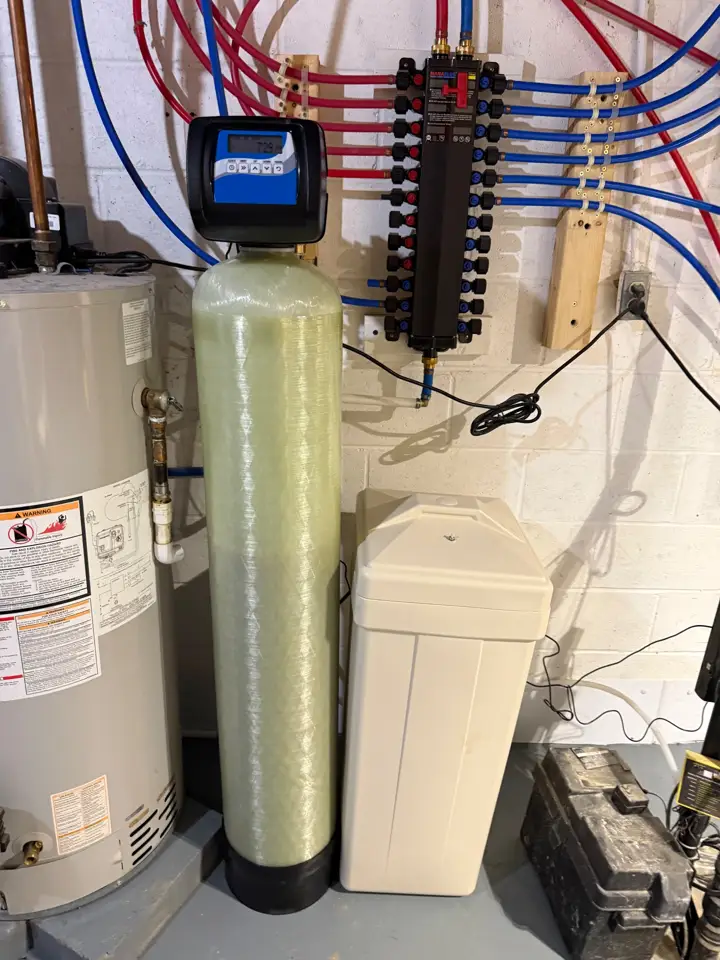
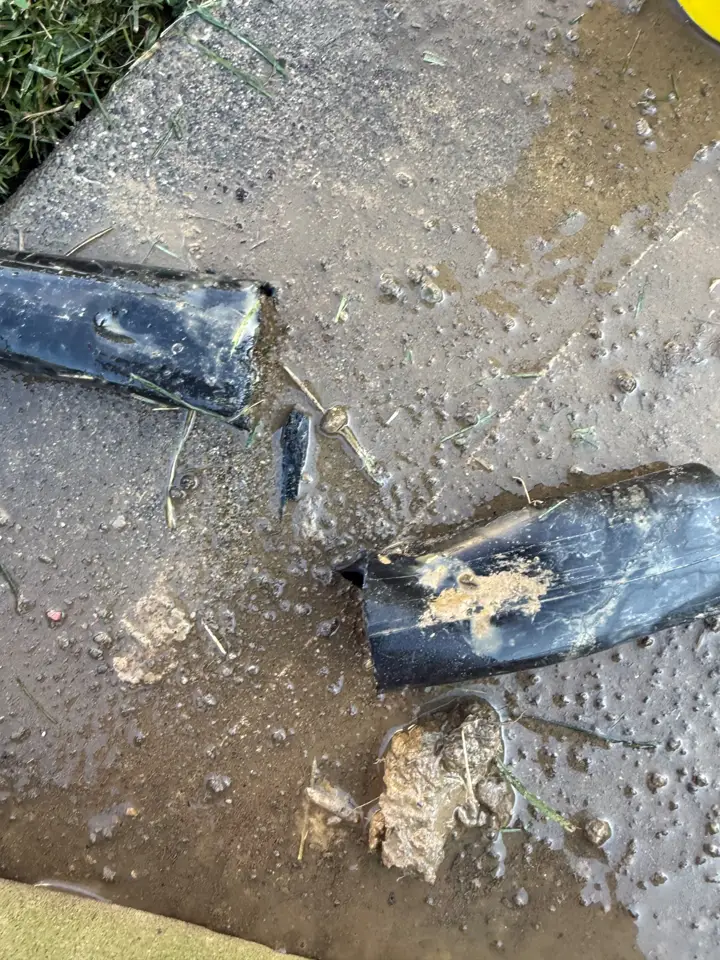
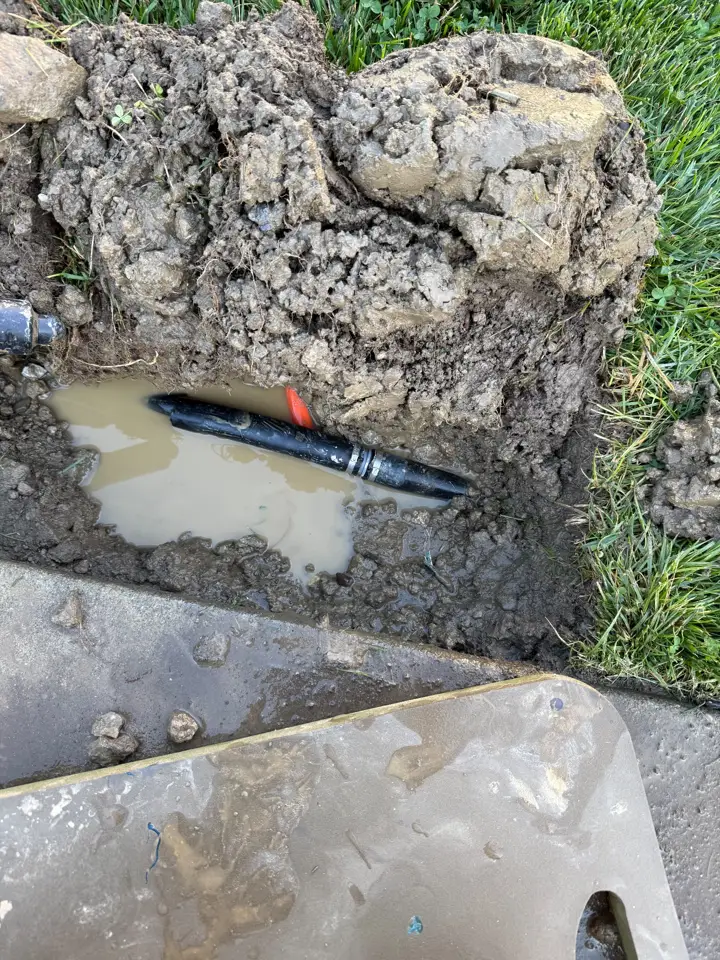
These are B&E’s own job photos: a basement treatment install with a softener, filter tanks and a big pressure tank; a softener beside a water heater; and a split poly line, dug out and repaired.
Water treatment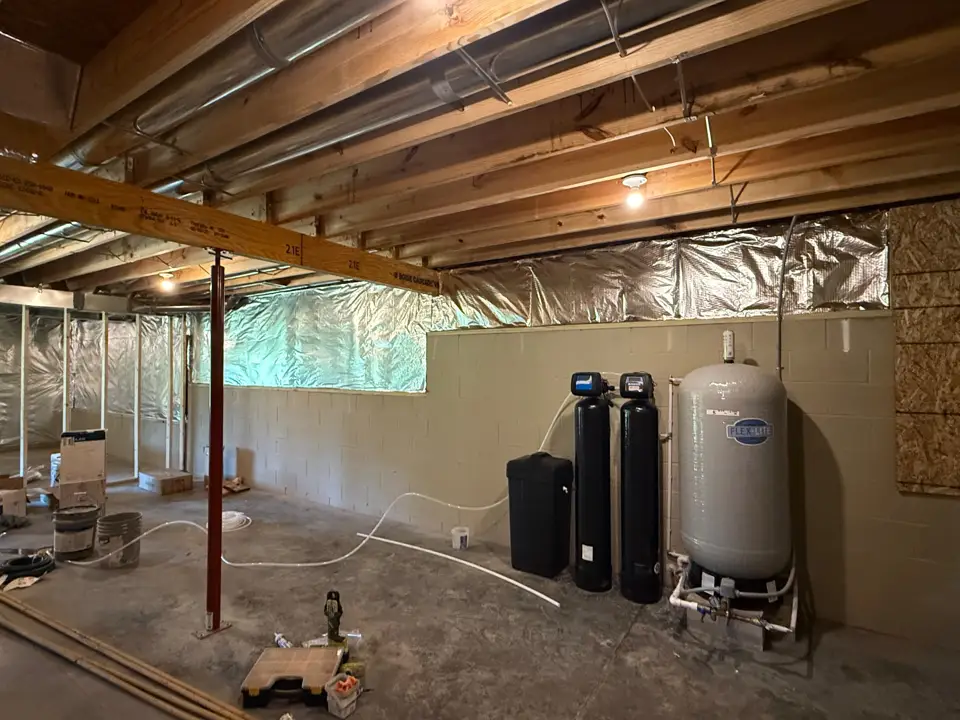
Layer 3Local knowledge
What’s under Richland County.
The glaciers left Richland County with two kinds of water. In the old valleys of the Clear Fork, Rocky Fork and Black Fork, buried sand and gravel holds a lot of it. Up on the till and the ridges, wells drill down into Mississippian bedrock: Cuyahoga shale and sandstone, the Black Hand and Logan sandstones the old drillers called the “Big Injun,” and the Berea Sandstone at depth.
That’s why two wells on the same road can have different depth, yield and water. It’s also why B&E tests before it treats.
Source: ODNR, Ground Water Pollution Potential of Richland County (Report 63).
Layer 4Stand behind it
A warranty you can read in one breath.
Parts and labor are covered for the first year, and parts for the rest of the warranty period.
Water first
Clean, safe water for your home is the whole point. Every call starts there.
Diagnose, then replace
A pump isn’t always the problem. We find out what actually failed.
Stand behind it
Seven years on pumps and tanks, five on Hunter irrigation parts.
Any hour
Open 24 hours, 7 days a week, with emergency well repair.
Layer 5How it works
Four steps to water.
Call (419) 566-9589
Any hour. Tell us what the water is doing, or not doing.
We find the cause
Pump, tank, switch, line or water quality: diagnosis before replacement.
Clear options
What failed, what fixes it, and what it covers under warranty.
Water back on
The work is done by an Ohio Department of Health registered contractor.
Layer 6Straight answers
Well water questions.
I have no water from my well. What should I check first?
Check the breaker for the well pump in your electrical panel. If it’s tripped, reset it once. If it trips again, leave it off and call (419) 566-9589: a breaker that keeps tripping is telling you something is wrong with the pump, wiring or motor.
Why does my Ohio well water leave orange or brown stains?
That’s iron. It’s dissolved in a lot of Ohio groundwater and turns orange-brown when it meets air or bleach. Black stains usually mean manganese.
What is shock chlorination of a well?
Shock chlorination is disinfecting a well and the household plumbing with a strong chlorine solution, letting it stand, then flushing it out. It kills bacteria that have gotten into the well and water system.
My water stopped on a cold morning. Are my lines frozen?
Possibly. In Ohio the most common freeze spots are pipes in crawlspaces, unheated well pits, pump houses and exposed lines near the pressure tank. A line between the well and house that wasn’t buried deep enough can freeze too.
Who regulates private water wells in Ohio?
The Ohio Department of Health (ODH) Private Water Systems program sets the rules and registers contractors, and your local health district issues permits and inspections. In Richland County that’s Richland Public Health.
How deep are water wells around Mansfield?
It varies a lot across Richland County. Wells in the buried valleys of the Clear Fork, Rocky Fork and Black Fork can finish in sand and gravel, while upland wells usually drill through glacial till into Mississippian shale and sandstone, the Cuyahoga Group, the Logan and Black Hand, or the Berea at depth.